

Published on March 20, 2023
1936: Fennell conducts the U of R Symphony Band
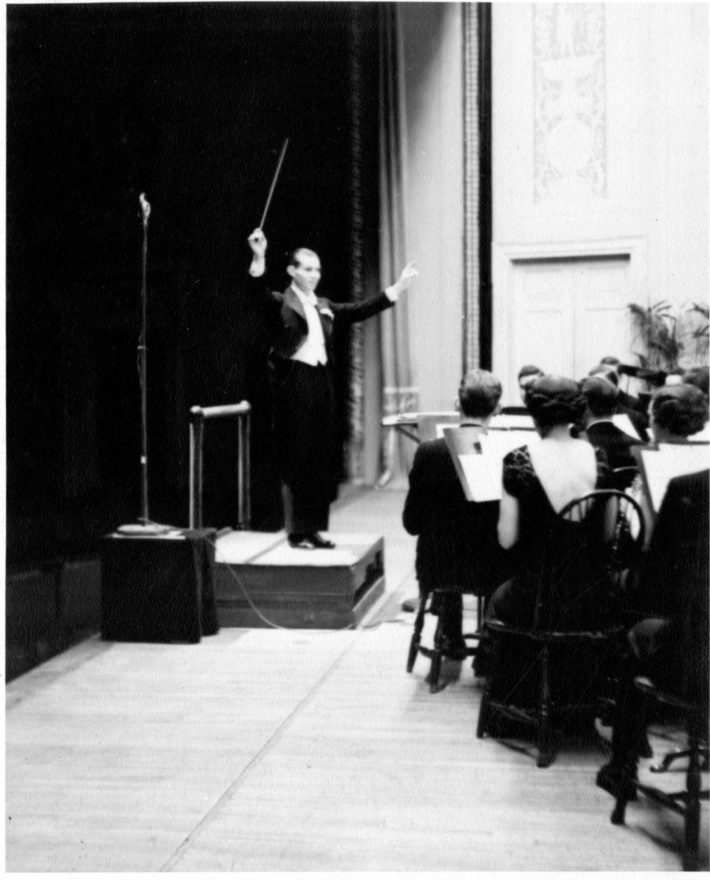
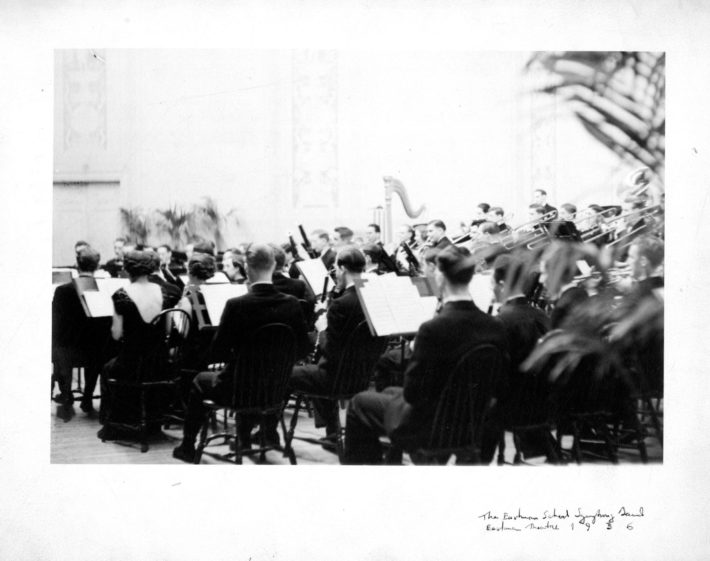
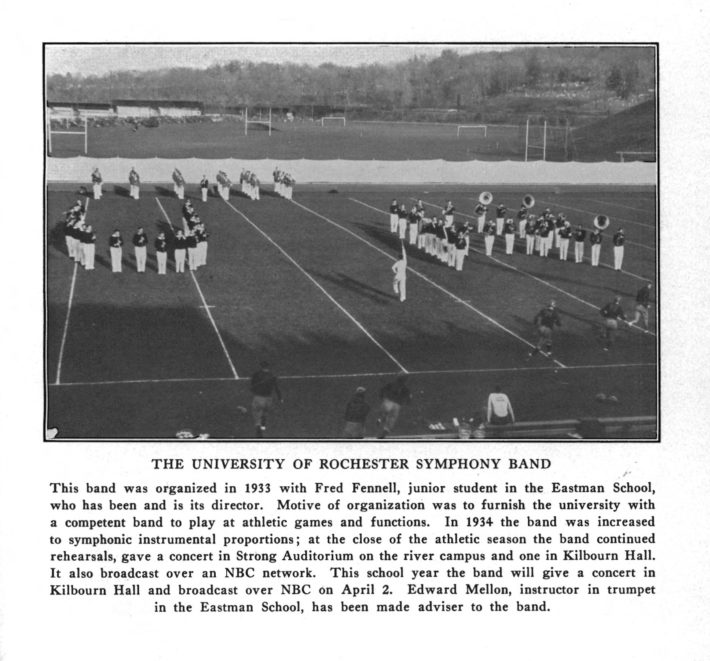
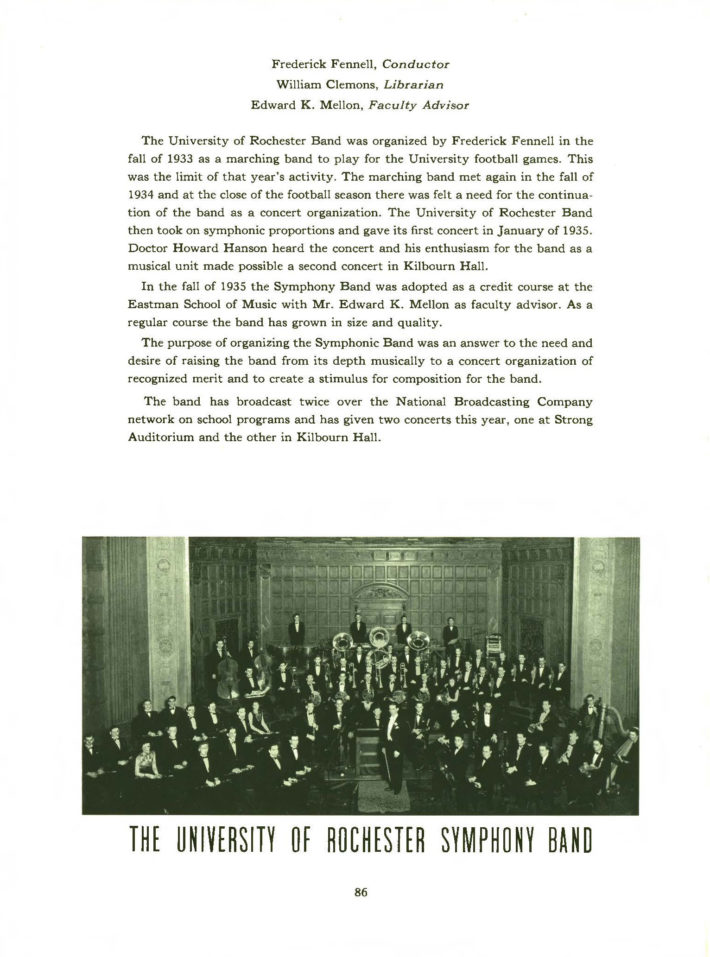
Eighty-seven years ago this week, on the evening of March 23rd, 1936, an industrious undergraduate named Fred Fennell conducted the second annual concert of the University of Rochester Symphony Band in the Eastman Theater. The Symphony Band was the direct result of the University of Rochester Marching Band that young Fennell had founded in the fall of 1933 when, as a new arrival at the Eastman School of Music, he had sought out the University’s marching band, only to be informed that no such band existed. Fennell had been drum major of the marching band of John Adams High School in his native Cleveland; undaunted, he set about organizing a marching band with himself as its director.[1] The genesis of the Symphony Band was briefly sketched in the February, 1936 issue of the Eastman School Alumni Bulletin (that page displayed here). That spring, the U of R Symphony Band was acknowledged in the Eastman School’s yearbook for the first time with a full-page profile in The Score 1936 (displayed here).
The program for the Symphony Band’s March, 1936 concert is displayed here. The program was an eclectic one, with original works programmed alongside transcriptions. Fennell’s abiding sense of history was manifest in his selection of the Symphony in B-flat by Paul Fauchet, believed at that time to have been the first symphony composed for band. In addition, the English band tradition was represented in the transcription by Gustav Holst of J. S. Bach’s Fugue à la Gigue. Two Eastman School composers were also acknowledged by way of the transcription of one movement from Howard Hanson’s Symphony no. 1 (“Nordic”) and the Five Miniatures by faculty member Paul White.[2] The Dance of the Russian Sailors was a selection that Fennell would later record with the Eastman Rochester Pops Orchestra.
For the record, the printed program for the Symphony Band’s first-ever concert (March 18, 1935) is also displayed here.
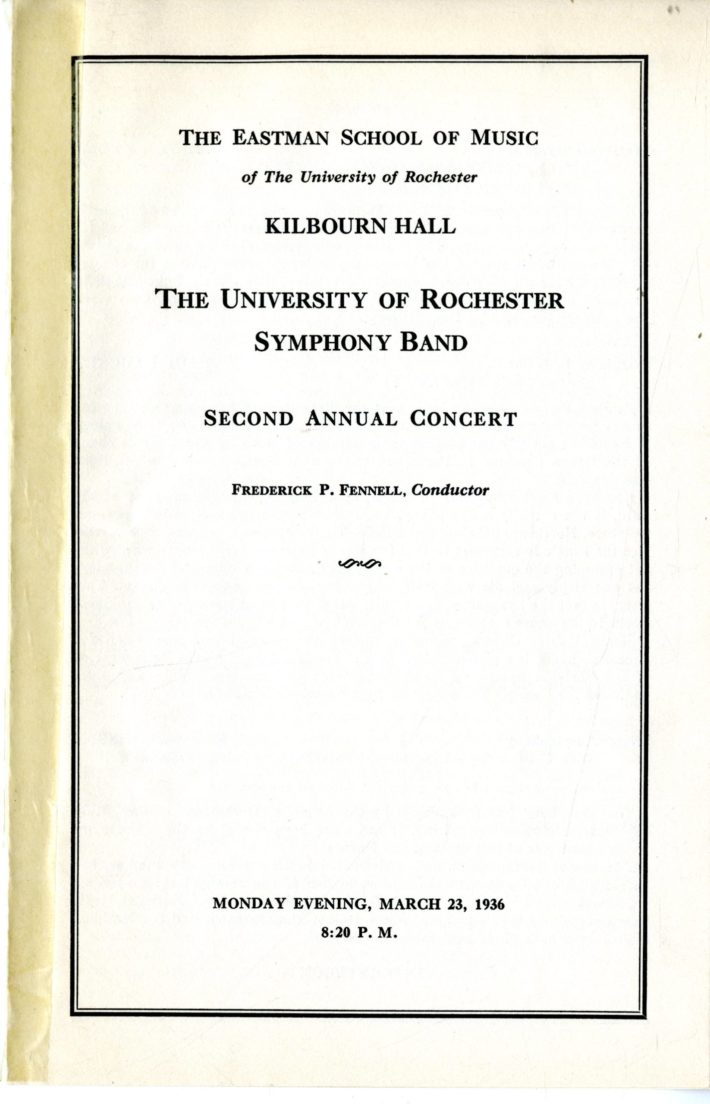
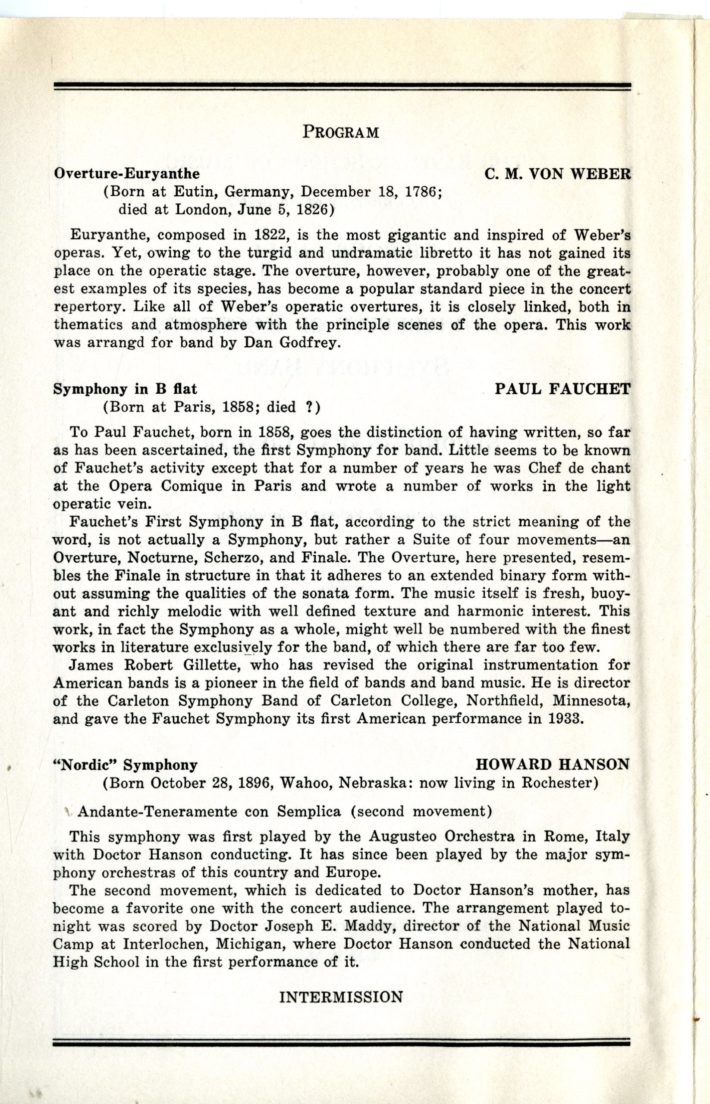
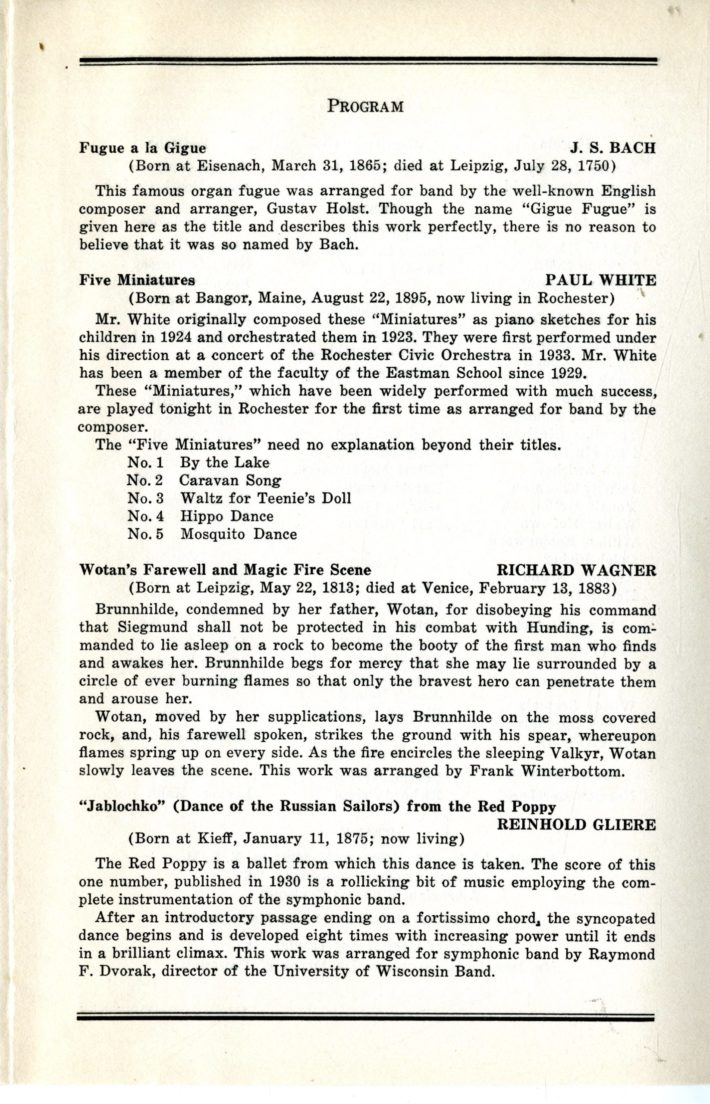
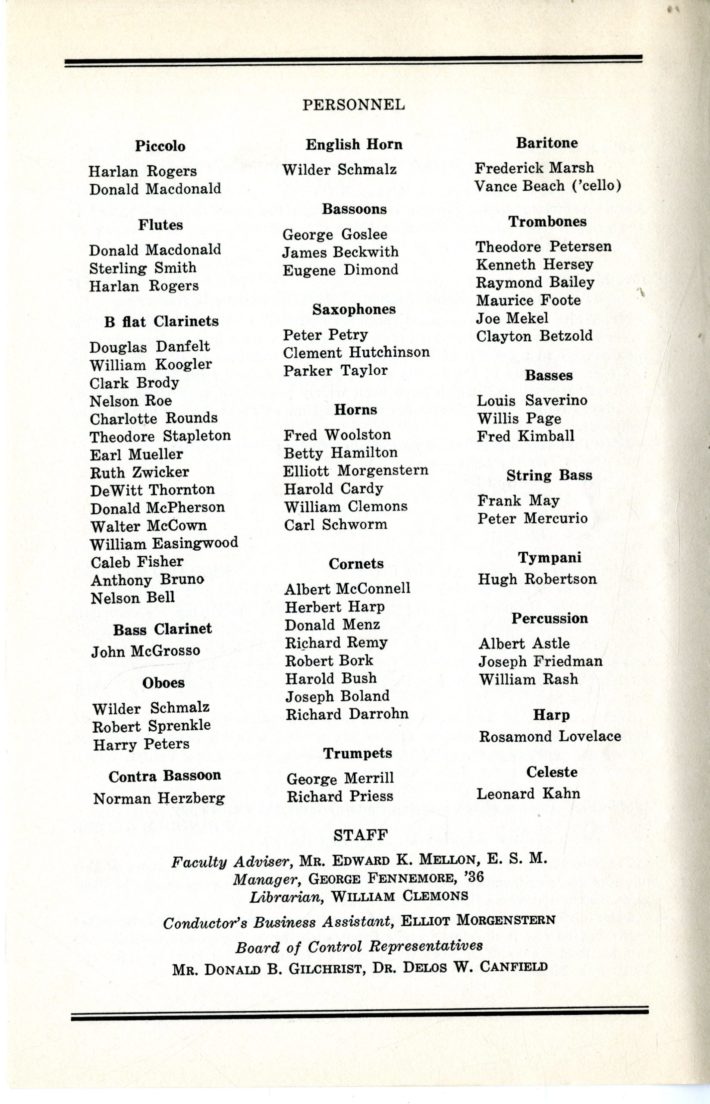
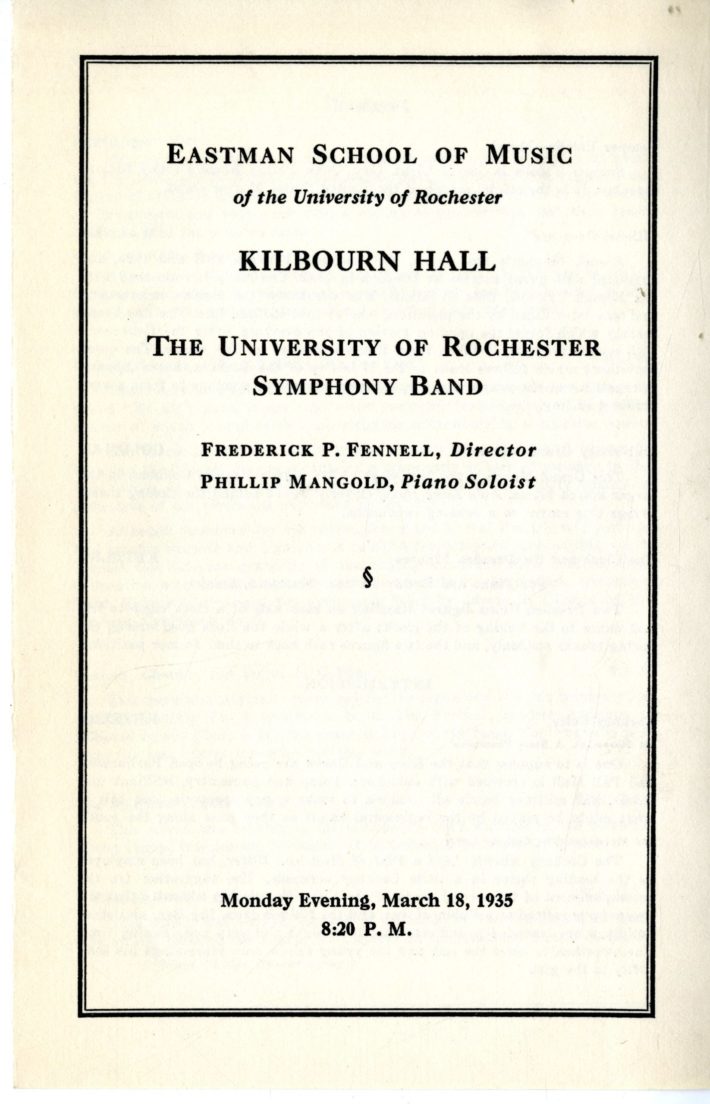
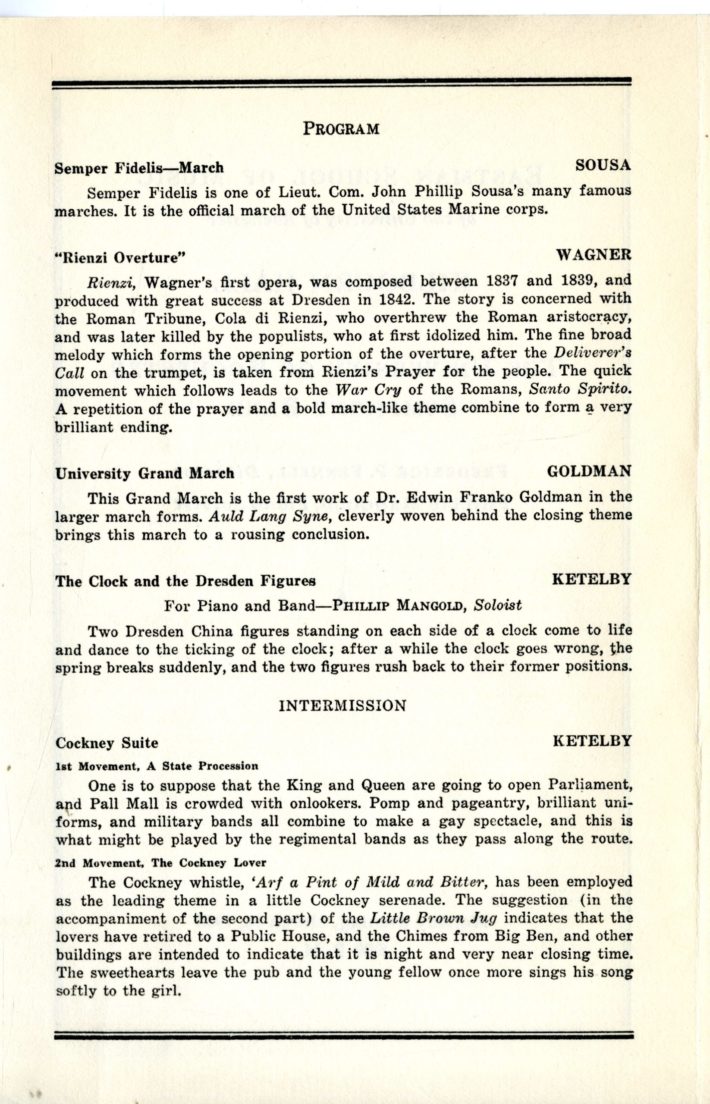
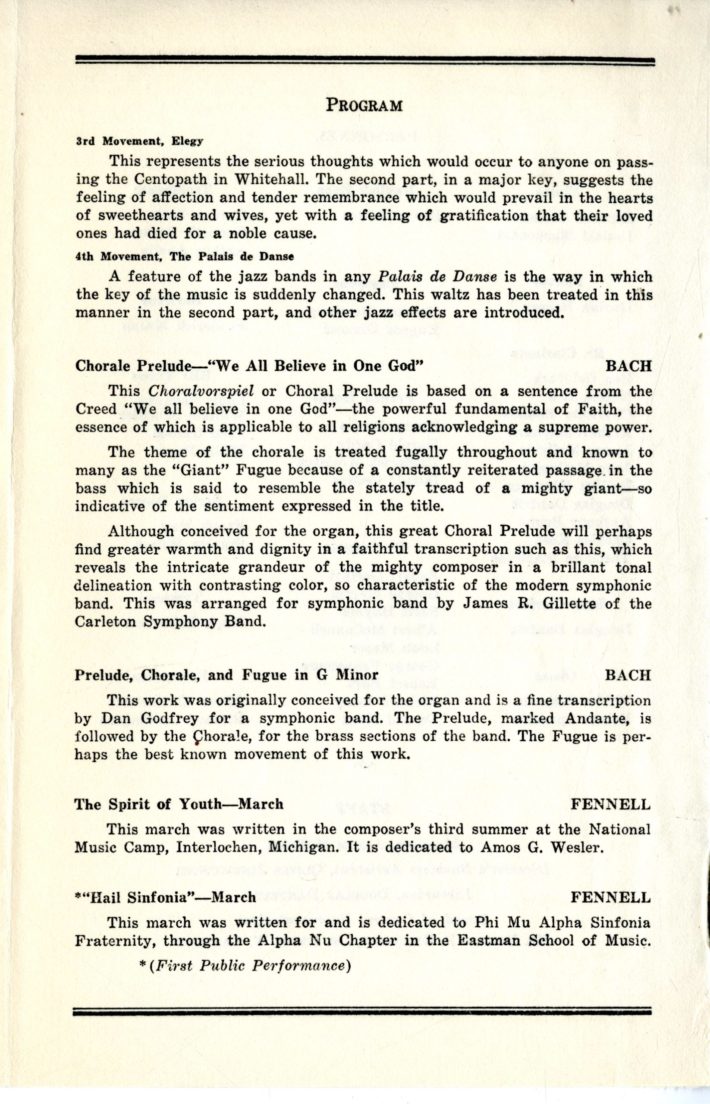
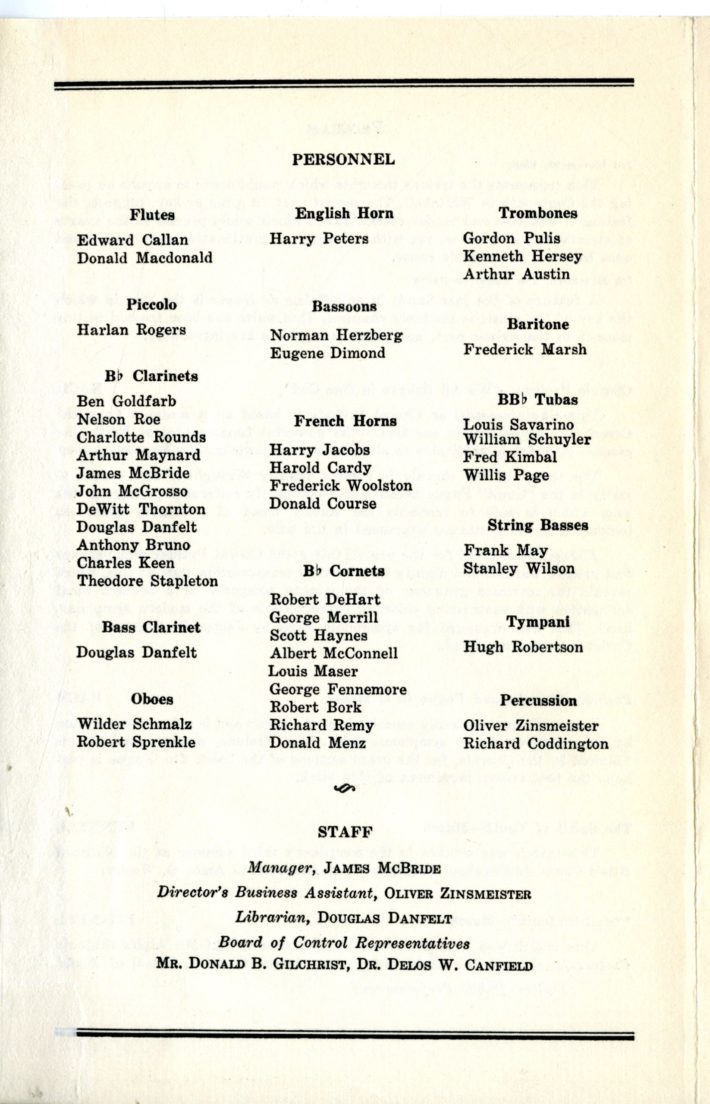
► Printed program for the UR Symphony Band’s first-ever concert, given on March 18th, 1935. Following this concert the young Fennell wrote to his mentor Albert Austin Harding at the University of Illinois, “The fellows are a real bunch. They don’t have to play in the band . . .let alone under an obscure conductor, yet we worked together and last Friday evening saw the fruits of our labor and the realization of my life’s ambition come true. …I am all for bands and you know that is where I intend to do my work.” Letter (March 21, 1935) from Fred Fennell to Albert Austin Harding. Original in the Albert Austin Harding Papers at the Sousa Archives and Center for American Music; photocopy in the Ruth T. Watanabe Special Collections, Sibley Music Library.
[1] Fennell briefly recounted the history of the marching band and the symphony band in the “Fennell Narrative” that was recorded in February, 1993 and published in Roger E. Rickson’s book Ffortissimo!: A Bio-discography of Frederick Fennell, the first forty years 1953 to 1993 (Ludwig Music Publishing, 1993).
[2] Served on the ESM faculty from 1928 until his retirement in 1965. Although a composer, his principal duties were orchestral conducting.
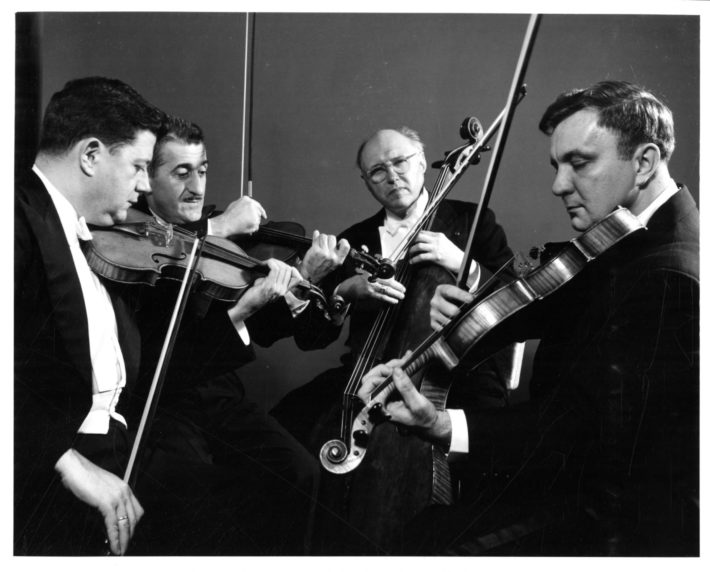
May 9th – 15th: Eastman String Quartet & the “new” Sibley Music Library
On May 9th, 1960, the members of the Eastman String Quartet returned from their nine-week tour that had taken them to Southern Europe, the Near East, and Northern Africa.
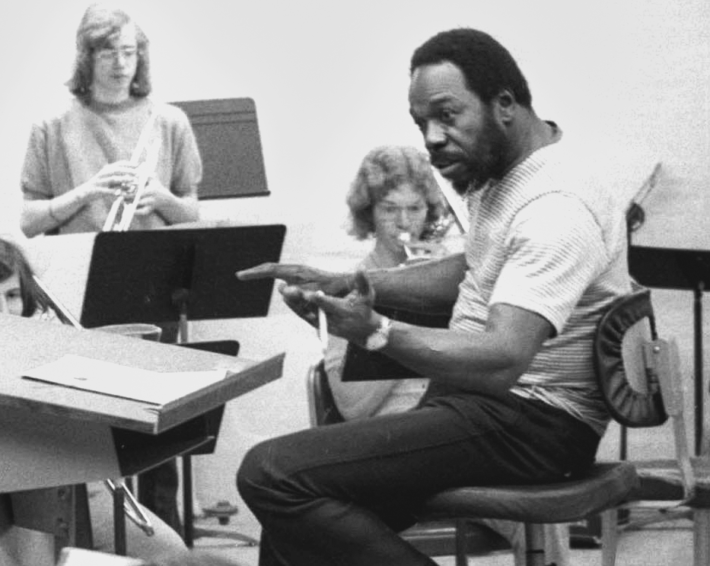
May 2nd – 8th: Thad Jones, Bob Brookmeyer & Ruth Watanabe
On Saturday, May 5th, 1973, the renowned Thad Jones appeared as guest conductor and soloist with the Eastman Jazz Ensemble
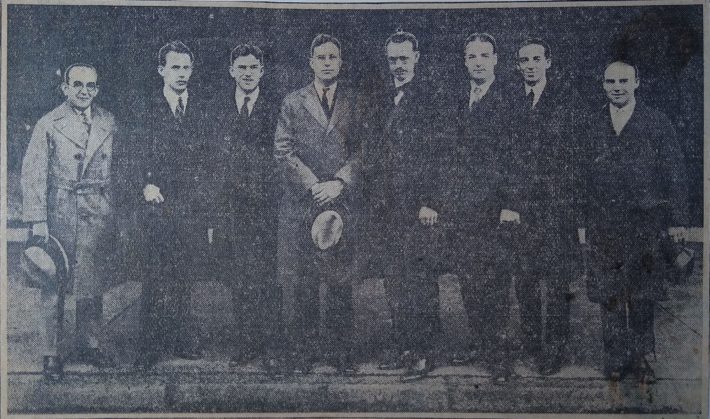
April 25th-May 1st: The first American Composers’ Concert
On May 1st, 1925, a “Concert of New Works by American Composers” took place in the Eastman Theater, marking the first of what would be named the American Composers’ Concerts at the Eastman School
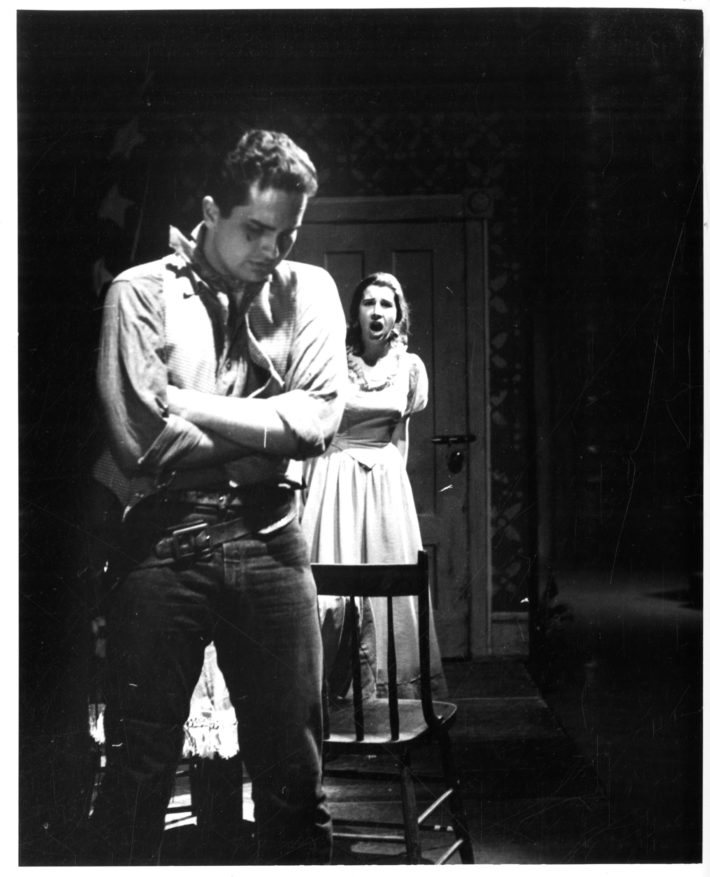
April 24th-30th: An eclectic operatic double-bill at the Festival of American Music
on April 27th and 28th, 1959, the Eastman School’s Opera Workshop staged The Hunted, a chamber opera in one act by composition postgraduate Martin Mailman.